
Travelisto destinations
Ecuador holidays
The Galápagos archipelago, Quito's Spanish old town, the Avenue of Volcanoes and the Amazon basin — Ecuador packs four worlds into a small country.
Overview
Welcome to Ecuador
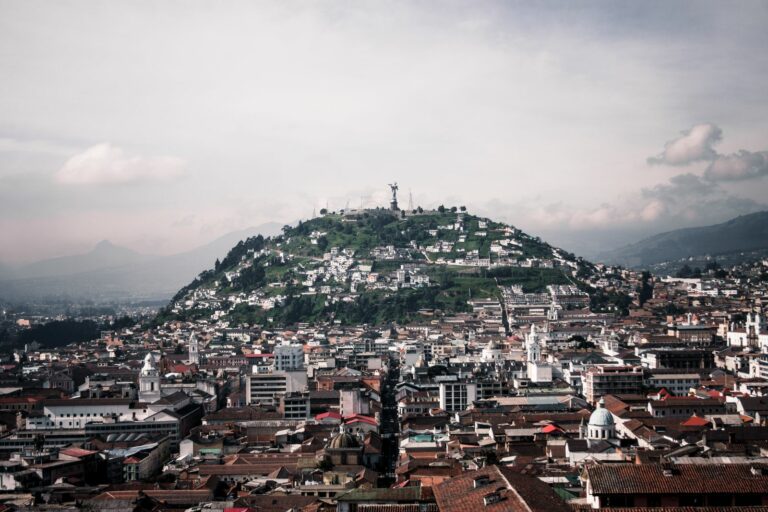
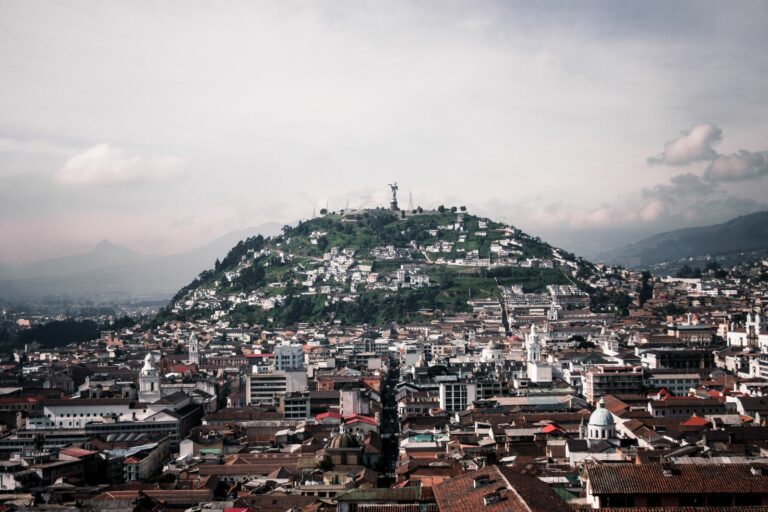
Ecuador packs four wildly different ecosystems into a country smaller than the UK — the Andes (the volcano corridor between Quito and Cuenca with snow-capped Cotopaxi, Chimborazo, Cayambe and Antisana, plus the Quilotoa crater lake and the Cotopaxi National Park); the Amazon (the Yasuni, Cuyabeno and Sani Lodge regions accessed via Coca or Tena, with stay-in-the-jungle lodge tradition); the Pacific coast (surf at Montañita, ceviche at Manabí, the Quito-to-Coast train through the Andes); and — the headline — the Galápagos Islands 1,000km offshore, where Darwin formed his theory of evolution and where the experience of swimming with sea lions, watching blue-footed boobies court, and walking among unafraid giant tortoises remains a once-in-a-lifetime wildlife encounter. Plus UNESCO sites in Quito's Old Town (one of the largest and best-preserved colonial old quarters in the Americas) and Cuenca's Centro Histórico (the southern Andean colonial city famous for its blue-domed Cathedral and the original Panama-hat manufacture).
The classic Ecuador-and-Galápagos trip is 12-14 days: Quito (2-3 nights — UNESCO Old Town walking with the Plaza Grande, La Compañía Jesuit church (gilded interior), San Francisco Plaza, Casa del Alabado pre-Columbian museum, the TelefériQo cable car up Pichincha volcano for sunset, the Mitad del Mundo equator monument 20km north (the actual geographic equator is 240m away at the Museo Solar Inti Ñan)) → optional Otavalo Saturday market (1 night, 90 minutes north of Quito — Indigenous Kichwa textile market that has run since pre-Columbian times) → Cotopaxi and the Avenue of the Volcanoes (2 nights — Cotopaxi National Park horseback ride, Quilotoa crater lake hike, the Hacienda La Cienega or Hacienda San Agustin de Callo for the colonial-haciendas-converted-to-hotels) → Cuenca (2 nights — UNESCO Centro Histórico, the Cathedral with the blue domes, the Pumapungo Inca-and-modern museum, the Panama-hat factory tour at Homero Ortega) → fly back to Quito and onward to Galápagos (4-7 nights — either cruise-based on a small expedition vessel, or land-based staying on Santa Cruz and Isabela islands).
Read more
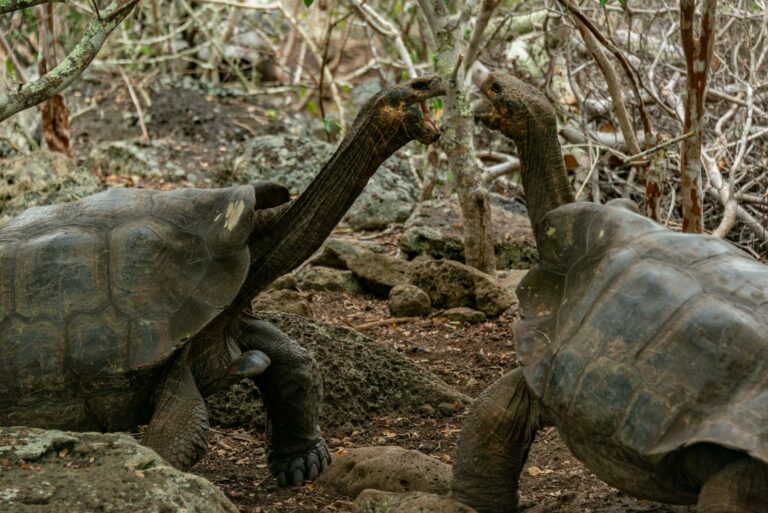
The Galápagos is the most-rewarding wildlife trip in the Americas. Charles Darwin's 1835 visit on HMS Beagle and the resulting On the Origin of Species made the islands the world's most-famous biology destination. The wildlife is famously unafraid because there were no large land predators on the islands (until humans arrived) — marine iguanas, giant tortoises (the Pinta Island and Floreana Island sub-species are recently extinct; Lonesome George the last Pinta tortoise died in 2012, his body preserved at the Charles Darwin Research Station), Galápagos penguins (the only penguin species at the equator), frigate birds with the crimson throat-pouches inflated for courtship, blue-footed boobies with their elaborate foot-lifting courtship dance, the marine sea-lion colonies that you can swim alongside, sea-turtles, hammerhead sharks at the northern islands (Wolf and Darwin — diving-only, advanced certification required). The wildlife is famously habituated to humans — you can sit on a beach with sea lions a metre away, or walk among Galápagos tortoises in the highlands of Santa Cruz.
Land-based vs cruise-based Galápagos is the trip-defining choice. Land-based (staying on Santa Cruz and visiting day-trip islands by boat, then transferring to Isabela for the second leg) is cheaper, more flexible, and reaches the populated islands (Santa Cruz, San Cristóbal, Isabela, Floreana) — typically 5-7 nights total. Cruise-based (3-7 nights on a small expedition vessel of 16-100 passengers, with twice-daily landings and snorkelling) reaches the more-remote uninhabited islands (Genovesa, Española, Fernandina, Bartolomé, the northern islands Wolf and Darwin for divers). The Galápagos National Park strictly regulates visitor numbers (capped at 250,000/year — actively reduced in recent years), itinerary approvals, and guide-to-passenger ratios (always with a certified Naturalist Guide). The headline cruise operators: Ecoventura, Lindblad Expeditions, Silversea, Celebrity Flora, plus the splurge Aqua Mare yacht.
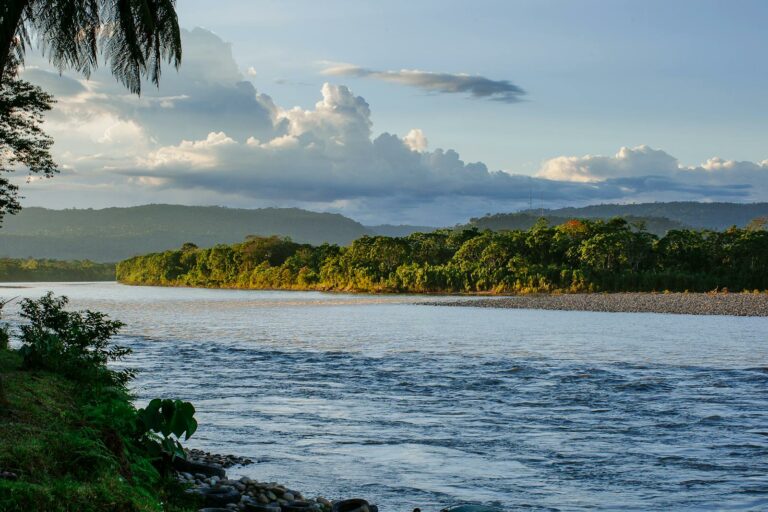
The Ecuadorian Amazon offers a different wildlife experience. Most Amazon trips run 3-5 nights at a jungle lodge: Sani Lodge (community-owned by the Sani Kichwa community, on the Napo River 3 hours from Coca by motorised canoe), Napo Wildlife Center (community-owned, in Yasuní National Park), La Selva Lodge (a long-established eco-lodge), Sacha Lodge (slightly upmarket). Activities: dawn birdwatching from the canopy tower (the Yasuní has the highest bird biodiversity in the world, 600+ species), piranha fishing in the blackwater oxbow lakes, night-walks for nocturnal wildlife, Kichwa community visits, and clay-lick parrot and macaw observations. The Cuyabeno Reserve north of the Napo is a quieter Amazon alternative.
Ecuador's coffee, cacao and Panama hats are the country's under-appreciated craft heritage. Coffee is grown in the Andean highlands and the coastal Manabí region — single-origin Ecuadorian beans have started appearing at specialty roasters in the UK and US. Cacao is the genuine native product — the "Nacional" variety of cacao is one of the world's most-prized for fine-chocolate production. Pacari and Republica del Cacao are the headline Ecuadorian chocolate producers. Panama hats are actually Ecuadorian — the finest are woven in Cuenca and Montecristi from the toquilla palm; the very finest "Superfino Montecristi" hats take weeks to weave by hand and retail at $1,000+.
UK travellers don't need a visa for stays up to 90 days. Ecuador uses the US Dollar (officially dollarised since 2000 — no currency exchange needed, ATMs dispense USD). Spanish is the universal language; Kichwa is widely spoken in Andean Indigenous communities; English is patchy outside upscale tourism. Most UK travellers fly via Madrid, Amsterdam or via the US East Coast.
Best for: nature-and-wildlife travellers (the Galápagos is unmatched), Andean-trekking adventure travellers, coffee and cacao enthusiasts, those wanting a compact South America taster, photographers (the volcanoes, the wax palms in Cocora, the Galápagos wildlife are all photogenic). The Galápagos has good wildlife year-round but specific species peak at specific times — penguins May-August, giant tortoise hatching November-February, sea-lion pups October-December. Often combined with Peru (Lima is a 2-hour flight) or Colombia.
Best time
Jun–Aug, Dec–Feb (Galápagos)
Flight from UK
~13h via Madrid / Amsterdam
Currency
US Dollar (USD)
Language
Spanish
From the team
Why we love Ecuador

Ecuador is the trip I send people on for the Galápagos — a 7-night cruise is the right structure. Add 3-4 nights mainland (Quito + Cotopaxi or Amazon) for cultural counterweight.
Amanda Amanda, Travel Designer · Music & Culture Meet our Travel DesignersMain areas
Where to go in Ecuador
3 distinct regions — they pair beautifully two or three at a time.
Galápagos Islands
Santa Cruz
Isabela
San Cristóbal
Floreana
Quito & Andes
Quito
Otavalo
Cotopaxi
Quilotoa
Amazon Basin
Tena
Coca
Yasuni NP
Find your trip
Holiday types in Ecuador
Pick a holiday style — or combine two. Each section links straight to the next step.
City breaks
Ecuador's cities reward 2-4 nights each — pair two for a tailor-made multi-centre trip.
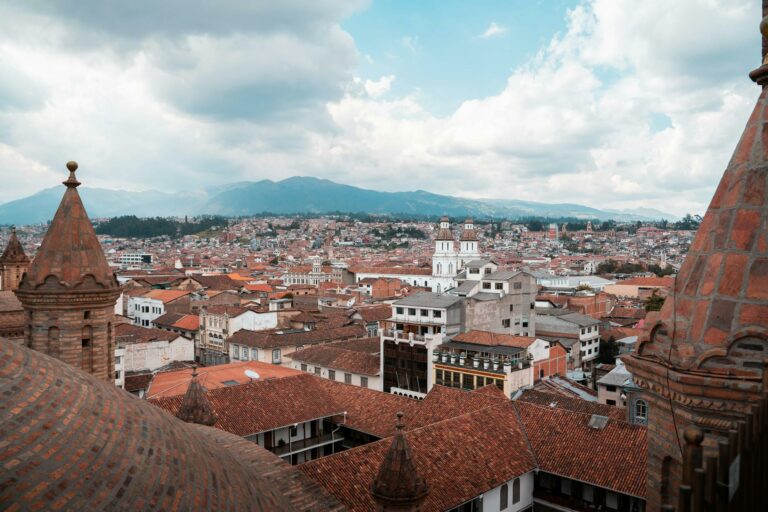
Cuenca
Cruises
The Galápagos Islands are the headline cruise destination — Lindblad, Aqua Expeditions, Silversea and Celebrity all run small-ship Galápagos cruises (5-15 nights). Manta and Guayaquil are mainland Ecuadorian cruise ports.
Escorted tours
48 escorted tours through Ecuador — guided, customisable, fully ATOL-protected.
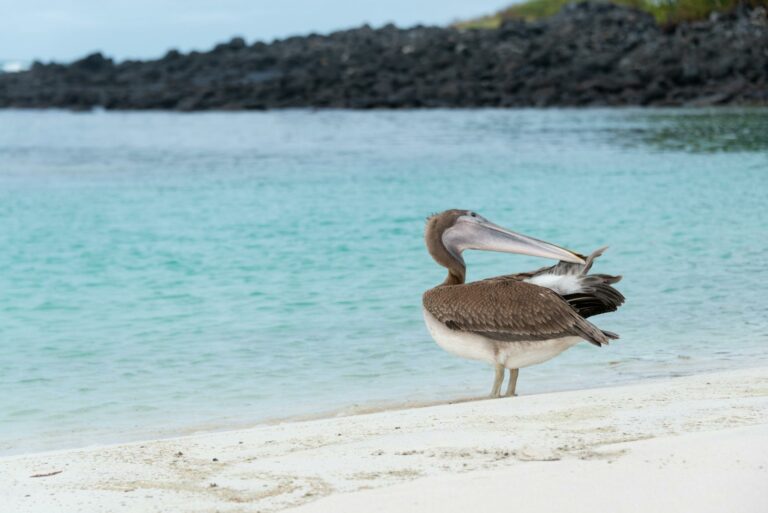
Every Travelisto tour runs with a small group (max 16), an English-speaking local leader, and is fully ATOL-protected. Most tours are also bookable as private departures.
Tailor-made
Everything you see above is a starting point — we'll shape any of these around how you actually want to travel.
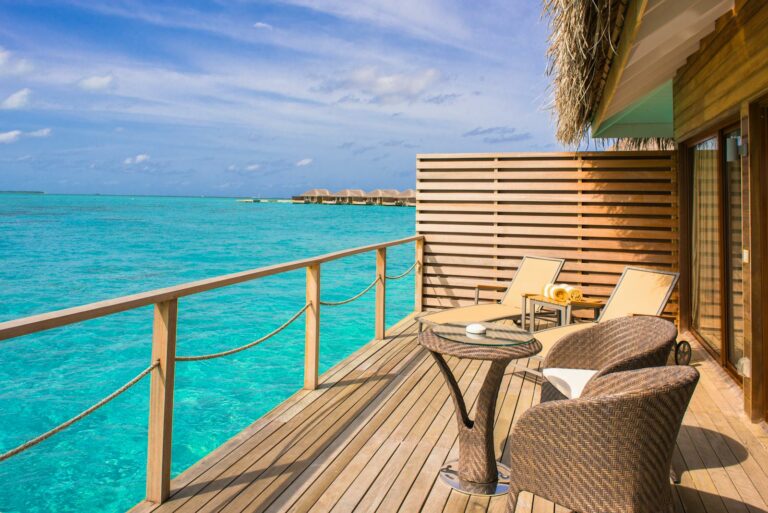
Bespoke Ecuador itinerary
Pick your headlines; we design the route and book the hotels.
Enquire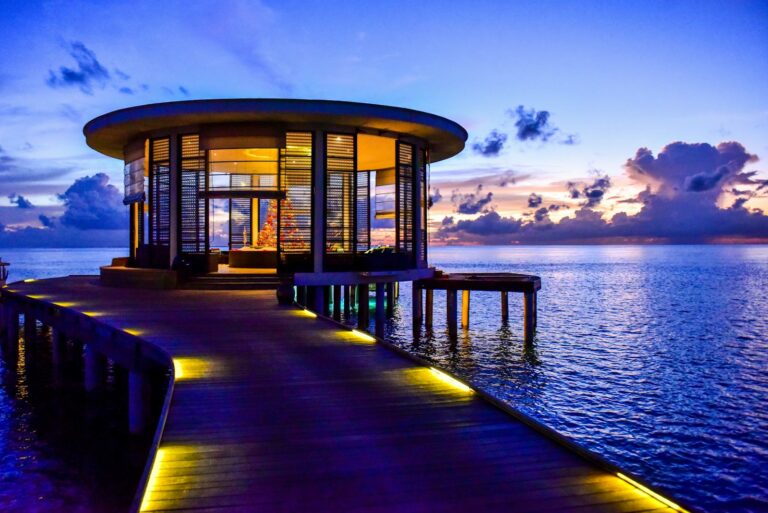
Multi-generational Ecuador
A pace that suits three generations.
Enquire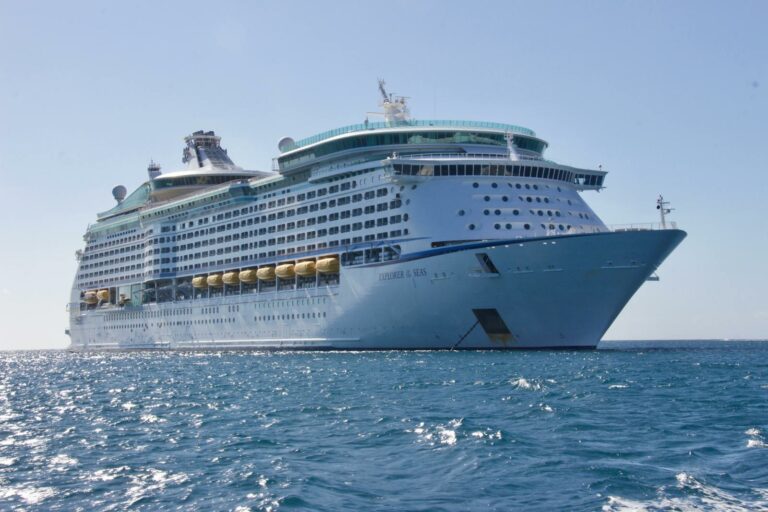
Ecuador + cruise
Pair Ecuador with a cruise — booked end-to-end.
Enquire
Honeymoon or special celebration
A milestone trip quietly arranged.
EnquirePractical info
Knowing before you go
When to go
Jan
22°
Feb
22°
Mar
22°
Apr
22°
May
22°
Jun
21°
Jul
21°
Aug
22°
Sep
23°
Oct
23°
Nov
23°
Dec
23°
June-September is dry season for the Andes. Galápagos works year-round (cool/dry Jun-Dec, warm/wet Jan-May).
Flights & how to get there
Flights from UK to Ecuador — ~13h to Quito or Guayaquil (1 stop).
Visa & passport
UK passport holders get 90 days visa-free entry. For up-to-date entry requirements and safety advice, check the UK FCDO travel advice for Ecuador.
Currency & money
The US Dollar (USD). Cards in cities; cash for rural. 10% tip standard.
Language & tipping
Spanish.
Health & safety
Consult your GP 6 weeks before travel. Yellow fever often required, malaria prophylaxis for jungle regions. Buy comprehensive travel insurance.
FAQs
Ecuador — your questions
When is the best time to visit Ecuador and Galápagos?
Galápagos is year-round; June–November is cooler with rougher seas (great for wildlife), December–May warmer with calmer seas. Mainland Andes: June–September is the dry season.
Do I need a visa for Ecuador?
UK passport holders get 90 days visa-free.
Galápagos cruise or land-based?
Cruise is the classic — covers more islands, expert naturalists, expedition feel. Land-based is more affordable and suits travellers who get seasick.
Can I combine Ecuador with Peru?
Yes — Quito–Lima is a 2.5h flight. 14–18 day Peru + Galápagos is one of our most-booked South America combinations.
Make this trip yours
Plan your Ecuador holiday with a Travel Designer
Pick from any of the options on this page or tell us what you have in mind — we'll build it around how you actually like to travel. ATOL protected, flights included, real humans available 9am–7pm.
ATOL protected
100% financially protected in a Trust bank account
PTS 6035
4.7 on Trustpilot