
Travelisto destinations
Ivory Coast holidays
Yamoussoukro's Basilica, Abidjan's lagoon city, and the cocoa heartland of Africa.
Overview
Welcome to Ivory Coast
Côte d'Ivoire (Ivory Coast) is West Africa's most-economically-dynamic country and one of its most-surprising travel destinations. The country has positioned itself in recent years as the West African business hub (the African Development Bank is headquartered in Abidjan), and the tourism sector has been rebuilding after the 2002-2011 civil war period that closed the country to international visitors. Today the major travel destinations are accessible and welcoming. The headline: Abidjan (West Africa's most-modern city — Plateau's 1980s skyscrapers, Saint Paul's Cathedral with its dramatic cross-cable architecture, the Banco rainforest within the city limits, the Cocody and Marcory cosmopolitan districts, the Treichville nightlife and music scene); Yamoussoukro (the political capital deep in the country's interior, with the Basilica of Our Lady of Peace — the largest Christian church in the world by area, larger than St Peter's in Rome, built in the 1980s by President Félix Houphouët-Boigny as a near-replica of the Vatican); Grand-Bassam (UNESCO French-colonial seaside town with old administrative buildings, the National Costume Museum, the surf-and-beach scene that's been redeveloping); the cocoa heartland (Ivory Coast produces 40% of the world's cocoa beans, the world's largest cocoa producer); and the rugged Yamoussoukro-to-Man interior with masked-dance traditions of the Dan and Mahou peoples.
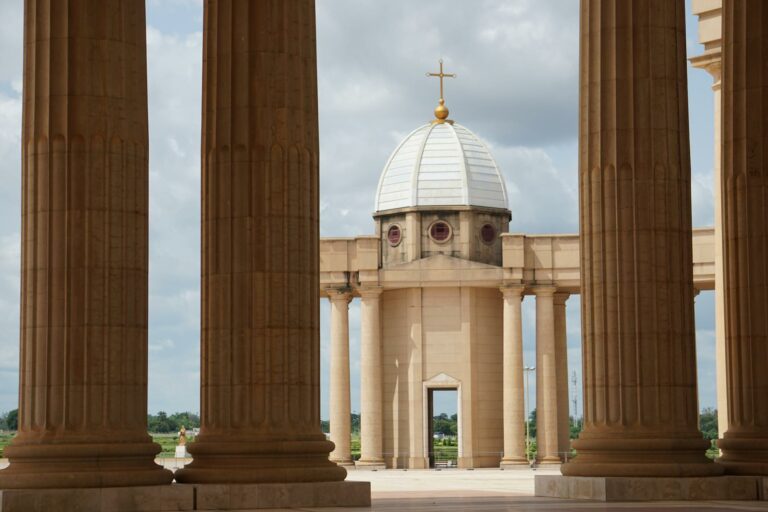
A 7-10 day Ivory Coast trip: Abidjan (3-4 nights — Plateau the modernist business district with the Pyramid building and Saint Paul Cathedral, the upmarket Cocody neighbourhood for hotels and restaurants, the Treichville night-market and music venues, the Banco National Park rainforest day-trip on the city's northern edge, the Cocody-Treichville lagoon ferry — Abidjan is a lagoon city with the working harbour separating distinct neighbourhoods, the Plateau Saint-Mark Cathedral (the colonial-era Catholic cathedral predating the modernist replacement), the Mosque of the Plateau, the chic restaurant scene at Le Toit d'Abidjan or the splurge at Norias) → Grand-Bassam UNESCO old town and beach (1-2 nights — the colonial-era administrative buildings now museums, the National Costume Museum with the country's indigenous textile heritage, the Sunday-afternoon parade tradition, the beach-and-surf at Assinie further east) → Yamoussoukro Basilica day-trip from Abidjan, or 1 night in Yamoussoukro (the Basilica visit is the central activity — the Italian-Belgian architects worked from a brief to "build the largest Christian church in the world" and succeeded; the basilica complex includes 7,000 sq m of stained glass, a 158m dome, parking for 11,000 cars, and a guest suite for the Pope; the building is currently underused with masses of just 200 worshippers attending the 7,000-seat church on most Sundays; controversial because of the contrast with the country's economic conditions — the Basilica cost an estimated $300 million) → Assinie or Sassandra Atlantic coast (2-3 nights at the Aki Boroko Lodge or Hôtel La Suite Assinie — surf-and-beach, the African beach-resort experience with proper Atlantic waves and the surf school tradition).
Read more
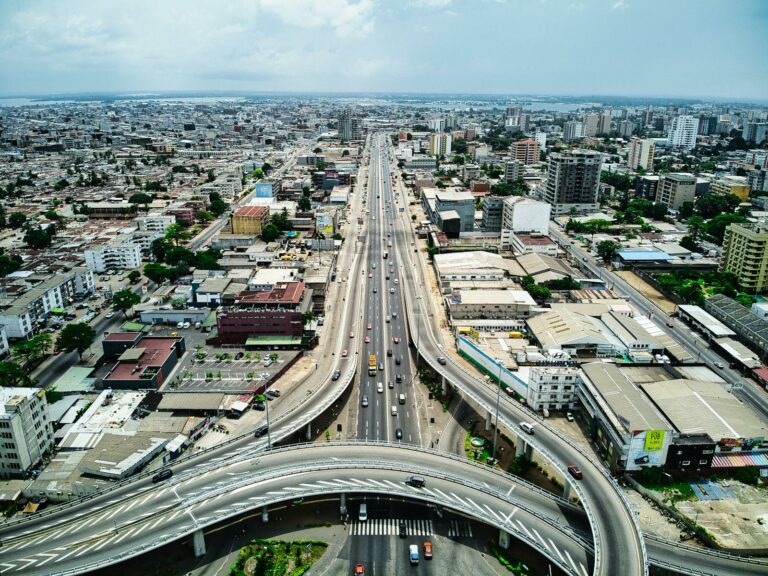
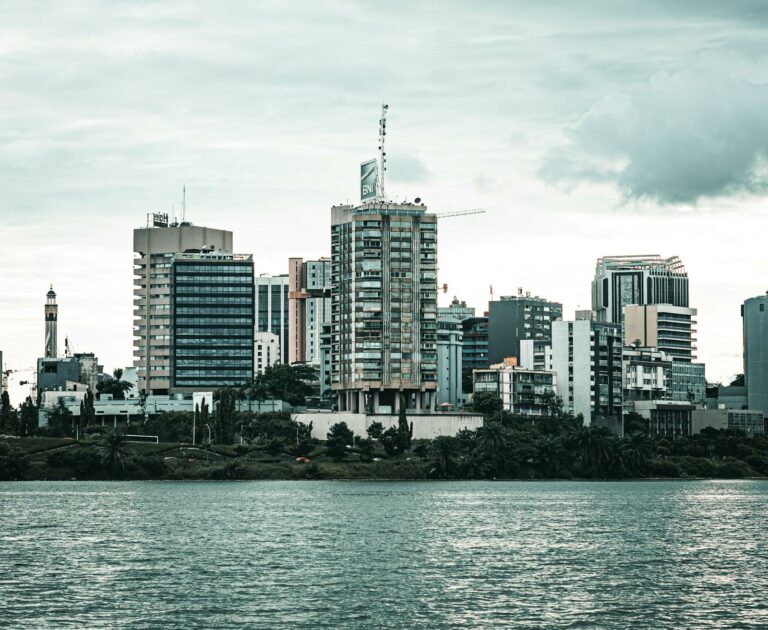
Abidjan is genuinely West Africa's most-distinctive city. The Plateau (the central business district) holds the 1980s-era highrises that gave the city its "Manhattan of West Africa" nickname during the 1970s economic boom — the architectural ambition is impressive even though many buildings are now slightly faded. Saint Paul's Cathedral (1985) is the dramatic Aldo Spirito-designed cross-cable structure with the dramatic curved-cable roof. The lagoon (Lagune Ébrié) divides the city into the Plateau (business), Cocody (upmarket residential), Treichville (working-class and cultural), Marcory (mixed), and the suburbs further east — the inter-district ferry service is part of daily life. Treichville is the cultural heart for the nightlife scene — the Coco Beach restaurant strip, the live-music maquis (the informal restaurants with bands), and the Sunday-afternoon football culture. The Banco National Park rainforest on the city's northern edge is a genuine rainforest preserve within an urban area — 30 sq km of West African primary rainforest with monkeys and 50+ tree species.
The Basilica of Our Lady of Peace at Yamoussoukro is the country's most-extraordinary single structure. President Félix Houphouët-Boigny — the founding president who governed Côte d'Ivoire 1960-1993 — commissioned the basilica in his hometown of Yamoussoukro as a personal religious-political legacy project. Construction took 4 years (1985-1989). The dome (158m tall, 90m diameter) was deliberately designed slightly smaller than St Peter's dome in Rome out of theological respect, but the basilica is larger overall — covering 30,000 sq m of floor area vs St Peter's 23,000. The stained-glass windows (7,400 sq m of glass) include a portrait of Houphouët-Boigny among the saints (controversially — he requested the inclusion before his death). The basilica was consecrated by Pope John Paul II in 1990 under conditions Houphouët-Boigny agreed (build a hospital nearby, allow the basilica to operate under Vatican oversight). The companion Yamoussoukro city — a quiet town of 200,000 — feels strange around the basilica's monumental scale.
The cocoa heritage is the country's economic backbone. Côte d'Ivoire produces 2.2 million tonnes of cocoa annually — 40% of the world supply, with the southern interior region between Daloa, Soubré and San Pedro being the heartland. Cocoa farming is small-holder — 6 million Ivorians work in cocoa, with average farm size of 2-5 hectares. Visits to working cocoa plantations are arranged through tour operators or directly through cocoa-cooperative offices in the regional capitals. The Festival du Chocolat in San Pedro each October celebrates the harvest. The country has been steadily moving from raw-bean export toward chocolate manufacturing — Cémoi (the largest Ivorian chocolate maker) and SAF-Cacao have built domestic manufacturing facilities.
The masked-dance tradition of the Dan, Mahou, Gouro, Senufo and We peoples in the western and northern interior is one of West Africa's most-significant cultural offerings. The Dan masks (originally from the Man region in the west) are the most-internationally-known — collected extensively by 1920s-30s Picasso and Braque, the Dan masks are now major holdings in the Musée du Quai Branly in Paris, the Met in New York, and the British Museum. Active masked-dance traditions continue in Dan villages around Man — the Man-region tour from Abidjan (8 hours by road, 1 hour by domestic flight) reaches villages where dance ceremonies are performed.
UK travellers need an e-Visa (apply online via the official Snedai government site, $73 USD, processing 24-72 hours). Côte d'Ivoire uses the West African CFA Franc (XOF, shared with seven other Francophone West African nations, pegged to the Euro at 655.957). French is the working language; English is patchy outside major hotels. The food: attiéké (the fermented cassava couscous — the national dish), kedjenou chicken (the slow-cooked spicy chicken in clay pots), garba (fried fish with attiéké), the Treichville night-market grilled fish, the Lebanese-Ivorian fusion at the Beirut Café and similar restaurants (Côte d'Ivoire has a significant Lebanese diaspora community shaping the restaurant scene), plus the country's ubiquitous bissap (hibiscus juice) and the locally-brewed Tuborg lager.
Best for: West Africa specialists, African-architecture travellers (the Basilica is genuinely remarkable), cocoa-trade and chocolate-heritage travellers, food-trade history travellers, beach-and-city combination travellers, masked-dance and West African art travellers. Often paired with Ghana (the historic British slave-trading forts) and Togo-Benin for a 3-week West African coast circuit. November-March is the dry season; April-October is the rainy season with afternoon downpours. Travel advice should be checked given regional security variations.
From the team
Why we love Ivory Coast

Ivory Coast is the under-discovered West African trip — Abidjan's modern energy plus Grand-Bassam's UNESCO French-colonial town.
Rossella Rossella, Luxury & Destination Specialist Meet our Travel DesignersMain areas
Where to go in Ivory Coast
2 distinct regions — they pair beautifully two or three at a time.
Abidjan & Coast
Abidjan
Grand-Bassam
Assinie
Yamoussoukro & Centre
Yamoussoukro
Basilica
Comoé NP
Find your trip
Holiday types in Ivory Coast
Pick a holiday style — or combine two. Each section links straight to the next step.
Beach holidays
Beach destinations grouped by resort area — pick the cluster that matches your pace.
City breaks
Ivory Coast's cities reward 2-4 nights each — pair two for a tailor-made multi-centre trip.
Yamoussoukro
Cruises
Ivory Coast cruise itineraries and Indian Ocean / Atlantic routes available.
Escorted tours
1 escorted tours through Ivory Coast — guided, customisable, fully ATOL-protected.
Every Travelisto tour runs with a small group (max 16), an English-speaking local leader, and is fully ATOL-protected.
Tailor-made
Everything you see above is a starting point — we'll shape any of these around how you actually want to travel.
Bespoke Ivory Coast itinerary
Pick your headlines; we design the route, brief private guides, and book hotels.
Enquire
Multi-generational Ivory Coast
A pace that suits three generations.
Enquire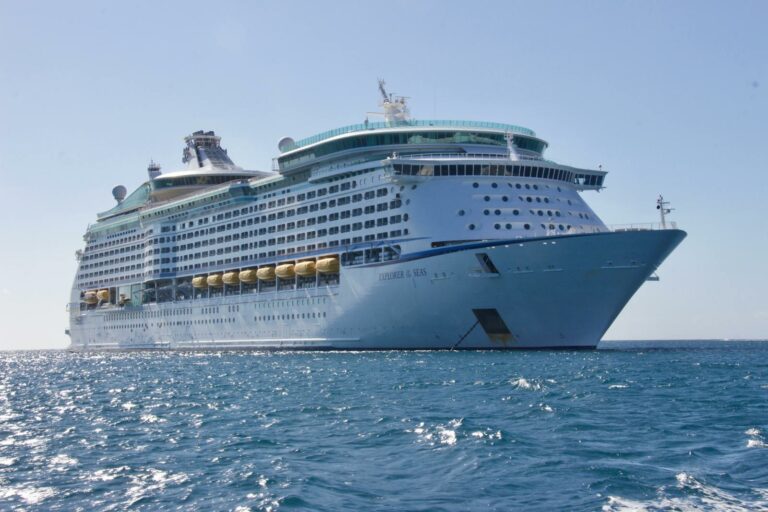
Ivory Coast + cruise
Pair Ivory Coast with a cruise — booked end-to-end.
Enquire
Honeymoon or special celebration
A milestone trip quietly arranged.
EnquirePractical info
Knowing before you go
When to go
Jan
30°
Feb
31°
Mar
31°
Apr
31°
May
30°
Jun
29°
Jul
29°
Aug
29°
Sep
30°
Oct
30°
Nov
30°
Dec
29°
November-March is the dry season.
Flights & how to get there
Flights from UK to Ivory Coast — ~7h to Abidjan (direct).
Visa & passport
UK passport holders need an e-Visa, applied online before travel. For up-to-date entry requirements and safety advice, check the UK FCDO travel advice for Ivory Coast.
Currency & money
The West African CFA Franc (XOF). Cards in cities; cash for rural. 10% tip standard.
Language & tipping
French; English limited.
Health & safety
Consult your GP 6 weeks before travel. Yellow fever often required for African travel; malaria prophylaxis for many regions. Buy comprehensive travel insurance.
Make this trip yours
Plan your Ivory Coast holiday with a Travel Designer
Pick from any of the options on this page or tell us what you have in mind — we'll build it around how you actually like to travel. ATOL protected, flights included, real humans available 9am–7pm.
ATOL protected
100% financially protected in a Trust bank account
PTS 6035
4.7 on Trustpilot