
Travelisto destinations
Senegal holidays
Dakar's Atlantic city, Saint-Louis colonial charm and the Saloum Delta birdlife.
Overview
Welcome to Senegal
Senegal is West Africa's most-visitor-friendly country and the regional French-speaking cultural-and-musical heart — the dynamic capital Dakar with its growing arts and restaurant scene, the UNESCO Île de Gorée (the most-visited slave-trade memorial site in West Africa, accessed by 20-minute ferry from Dakar harbour), the colonial UNESCO old town of Saint-Louis on the Mauritanian border (founded 1659 as the first French settlement in sub-Saharan Africa), the Pink Lake (Lac Rose / Lac Retba — naturally pink from salt-loving algae during the dry season), the Saloum Delta's mangroves and bird sanctuaries (UNESCO Biosphere Reserve), and a Senegalese music tradition that produced Youssou N'Dour, Baaba Maal, Ismael Lô, and the mbalax sound that has shaped West African pop for forty years. The country has a population of 17 million with a strong Wolof-speaking majority (the dominant Indigenous language and the lingua franca of trade), plus Pulaar, Serer, Diola and Mandinka ethnic-language regions.
A 10-day Senegal trip: Dakar (3 nights — Île de Gorée day-trip via the 20-minute Goree ferry from the central harbour, the slave-trade museums on Goree including the Maison des Esclaves with the haunting "Door of No Return", the Grand Mosque of Touba's Dakar branch, the African Renaissance Monument (the 49m-tall bronze monument completed 2010, controversial because of cost and aesthetic choices but distinctive on the city skyline), Soumbedioune fishing market at dawn for the genuine fishermen-arriving-with-catch experience, the music scene at Just 4 U, Le Patio, the Thiossane club — Youssou N'Dour's flagship venue, dinner at Lagon 1 for upscale Senegalese seafood, the Sandaga Market for textiles and souvenirs) → Saint-Louis colonial old town (2 nights — the Faidherbe Bridge connecting the island city to the mainland, the fishermen's quarter Guet-Ndar at the southern tip with its colourful pirogue (fishing canoe) parade morning and evening, the Hotel de la Poste where Antoine de Saint-Exupéry stayed while writing Vol de Nuit, the central Place Faidherbe, the night-time street-food at the central square, the cathedral, optional day-trip to the Langue de Barbarie peninsula or the Djoudj National Bird Sanctuary) → Saloum Delta (2 nights at the Lodge des Collines de Niassam or the more-accessible Royam Hôtel in Toubacouta — pirogue trips through the mangroves and shellfish-mound islands of the delta, the Sangomar peninsula, the bird-rich wetlands of Le Bandia and Royal Aerial Wildlife Reserve) → Saly or Cap Skirring Atlantic coast (2-3 nights of beach — Saly is the established resort coast 75km south of Dakar with extensive all-inclusive infrastructure; Cap Skirring at the southern Casamance region is the better-quality beach but requires a flight to Ziguinchor).
Read more
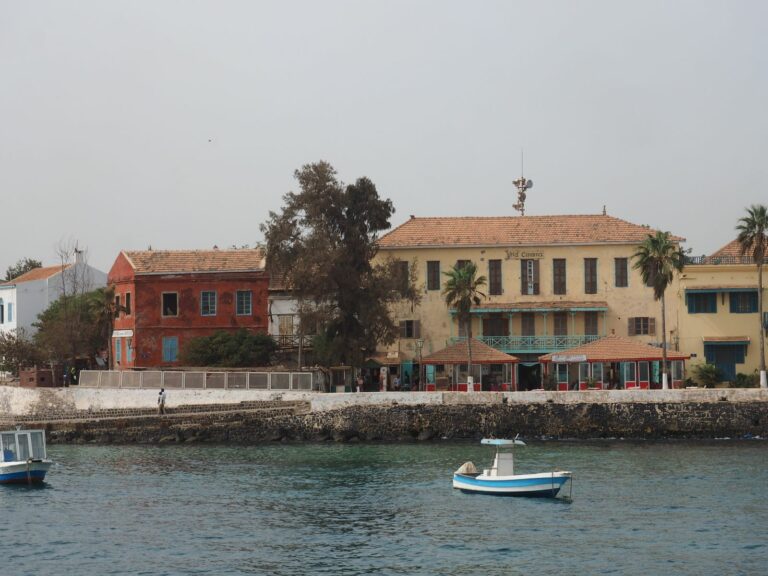
Île de Gorée is the trip's most-emotionally-significant experience. The small island (28 hectares, 900m long) 3km off the Dakar coast was a major slave-trading entrepôt 1444-1848 — Portuguese, Dutch, English and French traders used Gorée as the embarkation point for enslaved Africans transported across the Atlantic. The estimates vary widely (some scholars suggest only 33,000 enslaved Africans actually passed through Gorée's specific holding cells, others suggest the figure is much higher), but the symbolic significance of Gorée as a memorial site is enormous — Pope John Paul II visited in 1992, Bill Clinton in 1998, Obama in 2013, the King and Queen of Belgium in 2022, and the site has been UNESCO-listed since 1978. The Maison des Esclaves (Slave House, restored 1962) is the main visitor attraction with the haunting cells where captured Africans were held, the "Door of No Return" on the ocean side where ships embarked, and the upstairs administrative offices of the traders. The Historical Museum on Gorée, the IFAN African History Museum, and the Women's Museum complete the cultural circuit. The island itself is car-free, atmospheric, and the contrasts of slave-trade history with present-day cafe-and-artisan life is the visit's deepest layer.
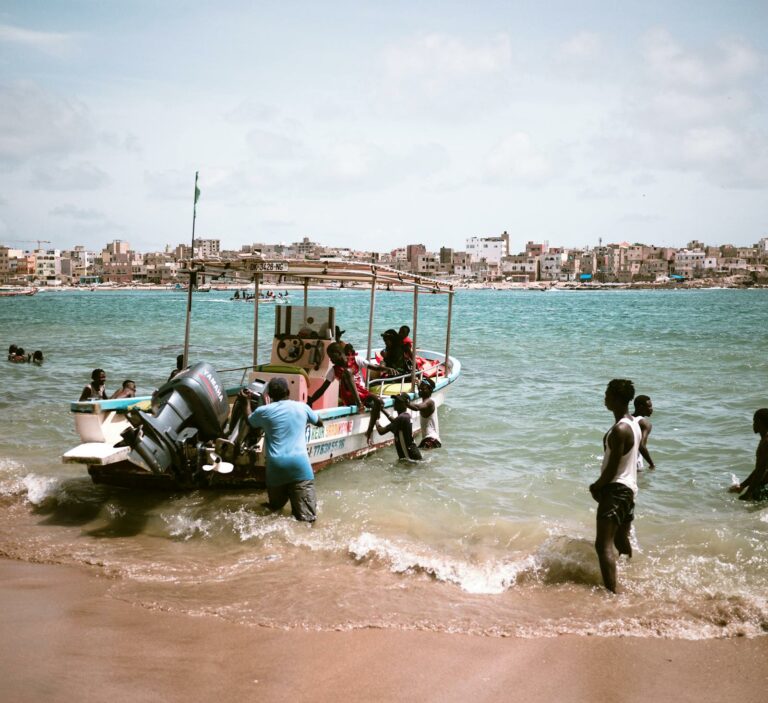
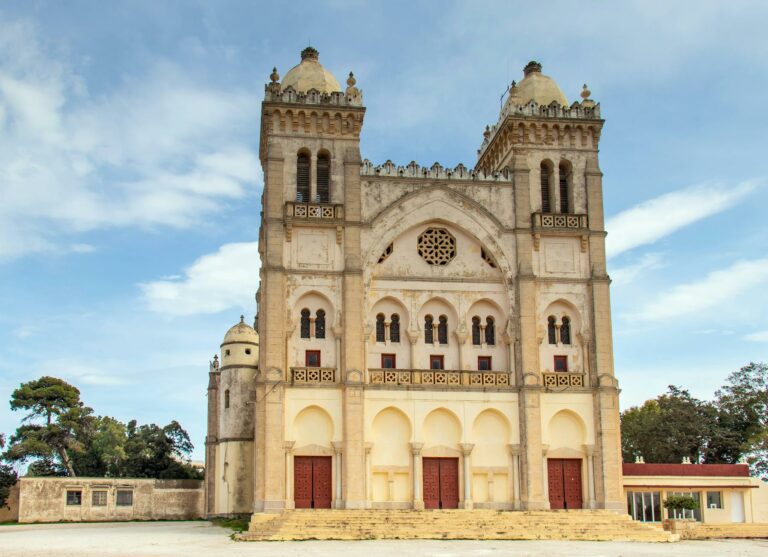
Saint-Louis is the country's second-most-significant cultural destination. The UNESCO old town occupies a 2km-long sandbar island in the Senegal River near the Mauritanian border. Founded 1659 by the French as a slave-trade and gum-arabic trading post, it became the capital of French West Africa 1872-1957 — the entire administrative and political headquarters of the French colonial empire across what's now Senegal, Mali, Guinea, Burkina Faso, Ivory Coast, Niger and Mauritania was based here. The Faidherbe Bridge (built 1897 by Gustave Eiffel's firm) connects the island to the mainland, and the architecture across the island combines French-colonial mansions, the African mainland-style Sor district, and the fishermen's quarter Guet-Ndar at the southern tip — one of the world's densest fishing settlements (90,000 people on 1 sq km), with hundreds of colourful wooden pirogues (fishing canoes) departing daily and returning at dawn with the fresh catch. The atmospheric character of Saint-Louis — slightly faded, slow-paced, with a strong music tradition (the Saint-Louis Jazz Festival each May draws international artists) — makes it the trip's most-distinctive cultural destination.
Senegalese music is the country's most-globally-significant cultural export. Mbalax — the Wolof-language popular music style that combines traditional Sabar drumming with electric guitars and dance-music rhythms — was developed in the late 1970s by Youssou N'Dour, El Hadji Faye, Omar Pene and the Étoile de Dakar. The Dakar nightclub scene is the genuine live-music experience: the Thiossane (Youssou N'Dour's flagship venue), Just 4 U, and Le Patio host regular performances by Senegalese musicians at 1am-4am start times. Outside Dakar, Saint-Louis' Quai des Arts and the smaller venues maintain the live-music tradition. The Festival du Sahel each February in Saly and the Saint-Louis Jazz Festival each May are the country's headline annual music events.
Senegalese teranga (the Wolof word for hospitality) is the cultural keynote — visitors are welcomed extraordinarily warmly into homes, markets, and family events. The food: thieboudienne (the national dish — rice and fish, the original West African rice-and-fish dish that has been adapted across the region and beyond, with the layered cooking of rice in tomato-and-fish broth, vegetables, and the actual fish), yassa poulet (chicken with onions and lemon — the second most-popular national dish), maafe (peanut stew with meat or fish), café Touba (the clove-spiced coffee from the Mouride Sufi order, drunk throughout the day), the ubiquitous bissap (hibiscus juice) and bouye (baobab fruit juice). Le Lagon 1, Just 4 U and Chez Loutcha are the headline Dakar restaurants; the small chop-shop stalls offer the genuine working-class dining experience.
UK travellers don't need a visa for stays up to 90 days. Senegal uses the West African CFA Franc (XOF, shared with seven other Francophone West African nations, pegged to the Euro). French is the working language; Wolof is the lingua franca of the street; English is patchy outside major hotels — basic French transforms the experience significantly. Direct UK flights to Dakar are limited — most travellers route via Paris (Air France), Brussels (Brussels Airlines), or Casablanca (Royal Air Maroc).
Best for: West Africa first-timers (Senegal is the gentlest introduction — better infrastructure, safer, more visitor-friendly than most regional alternatives), music travellers (the Dakar live-music scene is genuinely world-class), those drawn to colonial-and-Islamic culture blends, beach-and-city combination travellers, photographers (Saint-Louis at dawn is iconic, the Île de Gorée colonial buildings, the Pink Lake — Lac Rose — during dry season). Often paired with The Gambia (the river-country surrounded by Senegal, accessible via the southern Casamance), Mali (when security permits — the country has been off-limits for general tourism since the 2012 northern insurgency), or as a 10-day standalone trip.
From the team
Why we love Senegal
Senegal is the West Africa starter trip — Dakar's music scene, Gorée's emotional history, and the Sahel landscapes north.
Rossella Rossella, Luxury & Destination Specialist Meet our Travel DesignersMain areas
Where to go in Senegal
2 distinct regions — they pair beautifully two or three at a time.
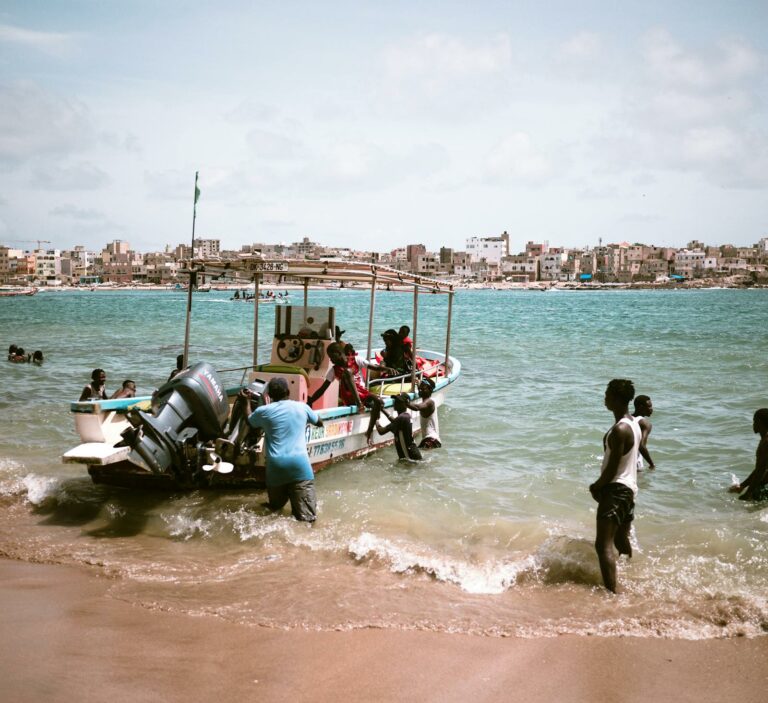
Dakar & Coast
Dakar
Île de Gorée
Saly
Saint-Louis & North
Saint-Louis
Djoudj NP
Lompoul
Find your trip
Holiday types in Senegal
Pick a holiday style — or combine two. Each section links straight to the next step.
Beach holidays
Beach destinations grouped by resort area — pick the cluster that matches your pace.
City breaks
Senegal's cities reward 2-4 nights each — pair two for a tailor-made multi-centre trip.
Saint-Louis
Cruises
Senegal cruise itineraries and Indian Ocean / Atlantic routes available.
Escorted tours
2 escorted tours through Senegal — guided, customisable, fully ATOL-protected.
Every Travelisto tour runs with a small group (max 16), an English-speaking local leader, and is fully ATOL-protected.
Tailor-made
Everything you see above is a starting point — we'll shape any of these around how you actually want to travel.
Bespoke Senegal itinerary
Pick your headlines; we design the route, brief private guides, and book hotels.
Enquire
Multi-generational Senegal
A pace that suits three generations.
Enquire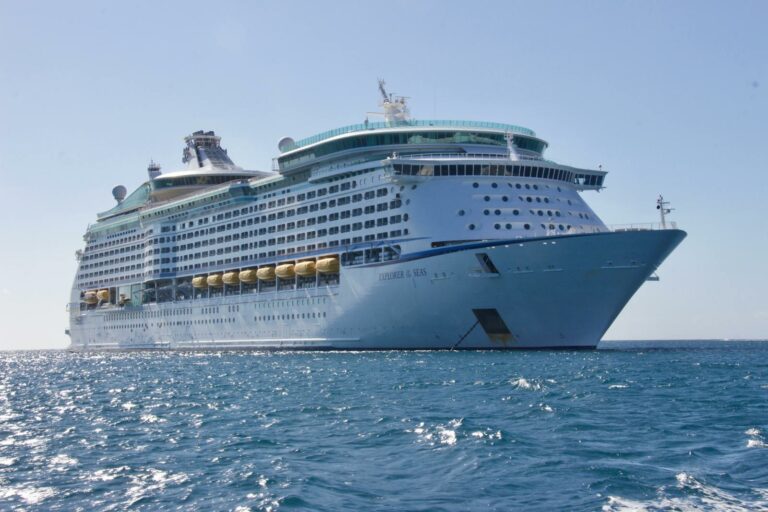
Senegal + cruise
Pair Senegal with a cruise — booked end-to-end.
Enquire
Honeymoon or special celebration
A milestone trip quietly arranged.
EnquirePractical info
Knowing before you go
When to go
Jan
30°
Feb
31°
Mar
31°
Apr
31°
May
30°
Jun
29°
Jul
29°
Aug
29°
Sep
30°
Oct
30°
Nov
30°
Dec
29°
November-May is the dry, prime season. June-October is rainy.
Flights & how to get there
Flights from UK to Senegal — ~6h to Dakar (1 stop).
Visa & passport
UK passport holders get 90 days visa-free entry. For up-to-date entry requirements and safety advice, check the UK FCDO travel advice for Senegal.
Currency & money
The West African CFA Franc (XOF). Cards in cities; cash for rural. 10% tip standard.
Language & tipping
French (and Wolof).
Health & safety
Consult your GP 6 weeks before travel. Yellow fever often required for African travel; malaria prophylaxis for many regions. Buy comprehensive travel insurance.
Make this trip yours
Plan your Senegal holiday with a Travel Designer
Pick from any of the options on this page or tell us what you have in mind — we'll build it around how you actually like to travel. ATOL protected, flights included, real humans available 9am–7pm.
ATOL protected
100% financially protected in a Trust bank account
PTS 6035
4.7 on Trustpilot