
Travelisto destinations
Zimbabwe holidays
Victoria Falls, Hwange's elephant herds, the Mana Pools canoe safaris and Great Zimbabwe ruins — Zimbabwe is one of Africa's most under-rated safari destinations.
Overview
Welcome to Zimbabwe
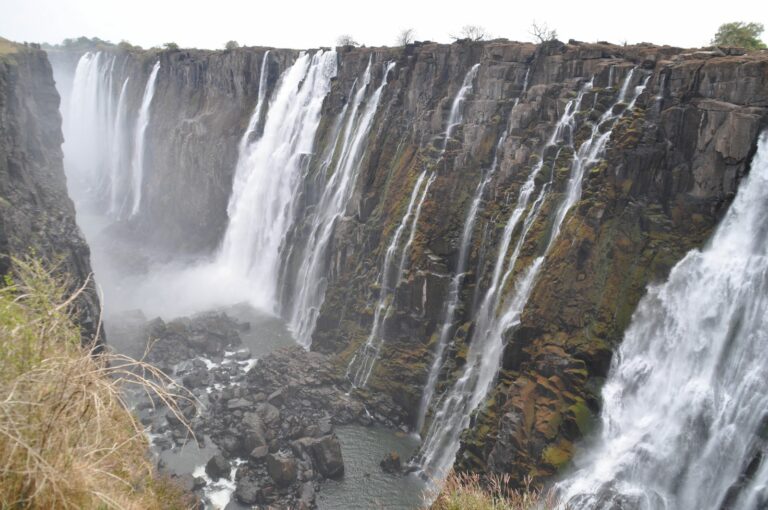
Zimbabwe is the headline-Africa country with the world's most-spectacular waterfall (Victoria Falls — the Zimbabwe side has the wider, more-dramatic views with the Devil's Cataract being the most-photographed cascade, plus the iconic Knife-Edge Bridge perspective), Africa's most-famous walking-safari park (Mana Pools National Park on the Zambezi River, where leopard, lion, painted dog and elephant can be tracked on foot — the country's most-distinctive safari experience and one of the world's few parks where unguided walking is permitted), the elephant-dense Hwange National Park (40,000+ elephants, especially concentrated at the dry-season pumped waterholes), the haunting ruins of Great Zimbabwe (UNESCO, the medieval stone city that gave the country its name, occupied 11th-15th centuries by an early Shona kingdom), and Matobo Hills National Park (UNESCO, the rare-rhino tracking experience plus dramatic rock formations and ancient San rock-art sites). The country has had political-economic difficulties for two decades but the tourism circuit (Victoria Falls, Hwange, Mana Pools, Matobo, Great Zimbabwe) remains genuinely-safe and well-organised.
A 10-14 day Zimbabwe trip: Victoria Falls (3 nights at one of the established lodges — Victoria Falls Hotel (the 1904 colonial-period grand hotel, the headline accommodation), Ilala Lodge, the splurge Royal Livingstone (technically on the Zambian side but with bridge crossings for the Falls visit), or the more-recent Zambezi Sands or Old Drift Lodge — the falls walking circuit with the Zimbabwean side viewpoints, the dramatic helicopter ride over the falls and the Batoka Gorge (the "Flight of Angels" — 15 minutes for the iconic aerial view), the Zambezi sundowner cruise upstream from the falls with hippos and elephants at sundown, the bridge bungee jump or the gorge zip-line, optional Devil's Pool seasonal swim — only feasible August-January when the river level is low, and only from the Zambian side requiring border crossing for the day) → fly to Hwange National Park (3 nights at Davison's Camp, Linkwasha, or The Hide — the country's largest park, 14,650 sq km, with classic vehicle-based safari, the elephant herds at the dry-season pumped waterholes are the headline experience, plus lion, leopard, painted dog, and the largest concentration of African wild dogs in Africa) → fly to Mana Pools National Park (3-4 nights at Nyamatusi, Ruckomechi, or the more-budget Kanga Camp — the canoe-and-walking safari on the Zambezi, sleeping in tented camps with the river at the door, dawn walks tracking lion and leopard on foot, the trip-defining sense of African wilderness without vehicles or substantial infrastructure) → optional Matobo Hills (2 nights at Camp Amalinda or Big Cave Camp — rhino tracking on foot with armed scouts, the dramatic granite-balanced rock formations carved by the Pleistocene weathering, the ancient San rock-art sites in caves throughout the hills, the View of the World where Cecil Rhodes is buried, the Khami Ruins archaeology UNESCO site nearby).
Read more
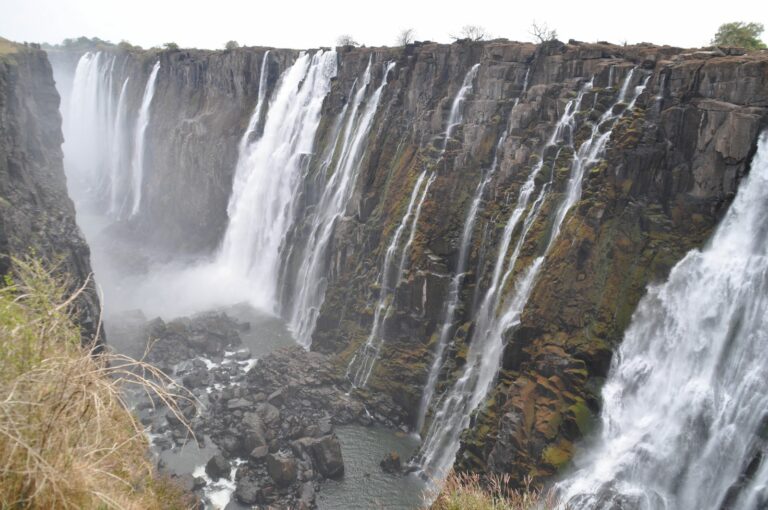
Victoria Falls is the country's headline attraction and one of the world's genuine natural wonders. The falls — 1.7km wide, 108m drop, with peak flow of 12,800 cubic metres per second (the largest waterfall by combined width and height in the world) — were named by Scottish missionary-explorer David Livingstone in 1855 after the British queen, but the indigenous Sotho name "Mosi-oa-Tunya" (the smoke that thunders) is more evocative — the spray from full-flow falls rises 400m and is visible from 50km away. The Zimbabwean side has 75% of the falls' length and the more-photographic viewpoints — the walking circuit takes 2-3 hours and reaches 16 named viewpoints including the Knife-Edge Bridge and Danger Point. The Zambian side has the Devil's Pool (the natural rock pool right at the falls' edge that you can swim in during low-water season August-January — a once-in-a-lifetime activity) and the Boiling Pot viewpoint below. The 1905 Victoria Falls Bridge connecting the two countries was designed by George Hobson — engineers can still see the original riveted construction. The bungee jump from the bridge (111m) was the world's third commercial bungee jump after Queenstown New Zealand and Bridges Africa. The Zambezi River upstream of the falls offers world-class white-water rafting after the Batoka Gorge below (Grade V rapids July-October).
Mana Pools is the connoisseur Zimbabwean safari and one of Africa's most-distinctive wildlife experiences. The 2,200 sq km park sits along a 50km stretch of the Zambezi River in northern Zimbabwe — the river forms the international boundary with Zambia. The "mana" of the name refers to the four pools that survive the long dry season (April-November), drawing wildlife to the riverside during the months when surrounding waters dry up. The park's extraordinary feature is the open mature acacia-and-mahogany woodland on the floodplains — the trees are old and spacious, vehicles can drive between them, and walking safaris allow unprecedented close-quarters wildlife encounters. The painted dog population (formerly called "wild dogs", now correctly "painted dogs" Lycaon pictus) is one of Africa's most-significant — the Mana Pools population has been intensively researched and protected. The walking-safari tradition began here in the 1970s under guides like Norman Carr (the father of African walking safari, who pioneered the South Luangwa walking-safari tradition in adjacent Zambia and helped develop Mana Pools), and Mana Pools remains the gold-standard walking destination in Africa.
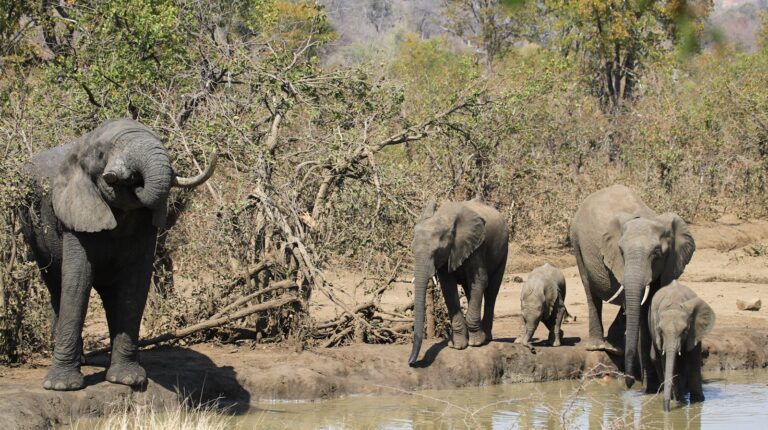
Hwange National Park is the country's wildlife volume reserve. The 14,650 sq km park in western Zimbabwe (the country's largest, larger than Kruger NP at the South African border) has the densest elephant population in southern Africa — 40,000+ during the dry-season concentration at the pumped waterholes. The park has no permanent natural water sources, so since the 1960s a network of pumped waterholes has been maintained by the National Parks authority and (since the 1990s economic crisis) increasingly by NGO-funded operations — the waterholes are the trip-defining safari experience, with elephant herds of 100+ individuals visible from a few metres at the camp viewing platforms during peak dry season (September-October). Plus the country's lion, leopard, painted dog populations and one of the largest white-rhino-reintroduction success stories in Africa. The headline accommodation: Davison's Camp (Wilderness Safaris' iconic camp with the waterhole at the front), Linkwasha (the larger Wilderness Safaris property), The Hide (the legendary owner-operated lodge in business since the 1980s — the original elephant-at-the-bar lodge that pioneered the close-quarters wildlife concept).
Great Zimbabwe is the country's most-significant pre-colonial heritage site. The medieval stone city — built 11th-15th centuries by an early Shona-speaking kingdom — covered 7 sq km at its peak with a population estimated at 18,000. The site is the only example of dry-stone Africa-Shona architecture at this scale, and its discovery and interpretation has had massive ideological significance. The Cecil Rhodes-era colonial administration insisted the ruins must have been built by external traders (Phoenicians, Arabs, Portuguese) because European colonial racism couldn't accept that pre-colonial Africans could have built such sophisticated architecture — this position was officially maintained until 1980 when the country gained majority rule and the archaeological scholarship caught up. The country itself was named after the ruins ("Zimbabwe" being a Shona word likely meaning "stone houses"). The site has three main areas: the Hill Complex (the older, religious complex), the Great Enclosure (the largest single ancient structure in sub-Saharan Africa — the wall is 11m high and 250m around), and the Valley Complex (the residential quarter). The Conical Tower in the Great Enclosure is the most-photographed feature.
UK travellers can apply for a visa on arrival ($55 USD, 30-day single entry) or e-Visa online. Zimbabwe's currency situation is complicated — the official Zimbabwean Gold (ZiG) replaced the volatile RTGS in 2024, but US dollars are the practical working currency for tourism. English is the official language and universally spoken; Shona and Ndebele are the major indigenous languages. The food: sadza (the cornmeal-porridge staple eaten daily), nyama (grilled meat), the kapenta dried-fish (small lake-sardine equivalents from Lake Kariba), traditional groundnut stews, the matemba dried fish from the Save River, and the world-famous Zambezi River bream and tigerfish. Zambezi Premium and Castle lagers are widely available; the wine selection is South African-imported.
Best for: experienced safari travellers wanting walking-safari rigour, photographers (Mana Pools light at dawn is famous, the elephant herds at Hwange waterholes are bucket-list, Victoria Falls in full flood March-May is dramatic), elephant enthusiasts (Hwange), historical-archaeological travellers (Great Zimbabwe is one of Africa's most-important pre-colonial sites), conservation-driven travellers. Often combined with Zambia (Victoria Falls is half-and-half between the countries), Botswana (Chobe is 90 minutes from Vic Falls via the Kazungula border crossing), South Africa, or Mozambique.
From the team
Why we love Zimbabwe

Zimbabwe is the Victoria Falls trip — pair with Hwange safari and you have a 7-10 day Southern Africa cornerstone.
Rossella Rossella, Luxury & Destination Specialist Meet our Travel DesignersMain areas
Where to go in Zimbabwe
2 distinct regions — they pair beautifully two or three at a time.
Victoria Falls
Victoria Falls
Devil's Pool
Bridge bungee
Hwange & Mana Pools
Hwange NP
Mana Pools
Matobo Hills
Find your trip
Holiday types in Zimbabwe
Pick a holiday style — or combine two. Each section links straight to the next step.
City breaks
Zimbabwe's cities reward 2-4 nights each — pair two for a tailor-made multi-centre trip.
Bulawayo
Cruises
Zimbabwe cruise itineraries and Indian Ocean / Atlantic routes available.
Escorted tours
6 escorted tours through Zimbabwe — guided, customisable, fully ATOL-protected.
Every Travelisto tour runs with a small group (max 16), an English-speaking local leader, and is fully ATOL-protected.
Tailor-made
Everything you see above is a starting point — we'll shape any of these around how you actually want to travel.
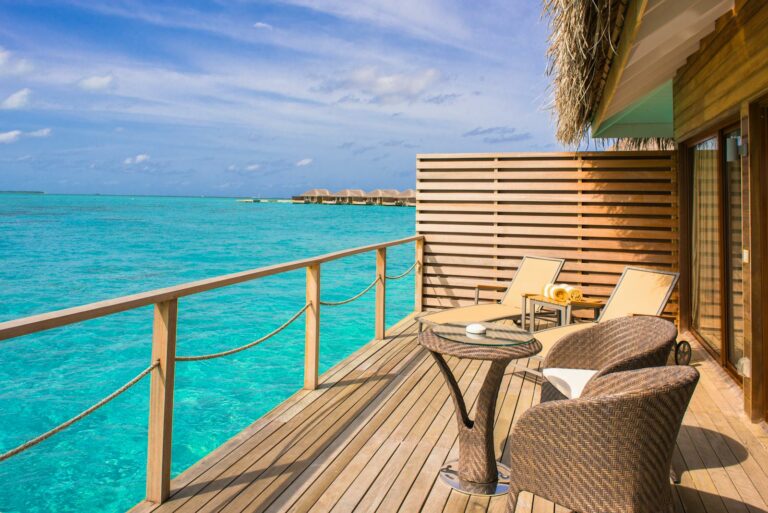
Bespoke Zimbabwe itinerary
Pick your headlines; we design the route, brief private guides, and book hotels.
Enquire
Multi-generational Zimbabwe
A pace that suits three generations.
Enquire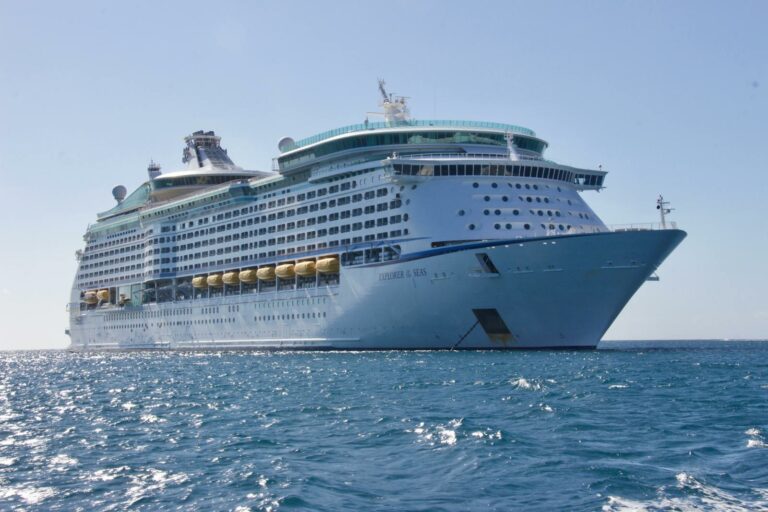
Zimbabwe + cruise
Pair Zimbabwe with a cruise — booked end-to-end.
Enquire
Honeymoon or special celebration
A milestone trip quietly arranged.
EnquirePractical info
Knowing before you go
When to go
Jan
27°
Feb
28°
Mar
28°
Apr
26°
May
25°
Jun
23°
Jul
23°
Aug
23°
Sep
25°
Oct
26°
Nov
25°
Dec
26°
May-October is the dry season (best for safari). Victoria Falls is at peak February-July (just after rainy season); September-December is the lower flow with Devil's Pool access.
Flights & how to get there
Flights from UK to Zimbabwe — ~14h via Johannesburg.
Visa & passport
UK passport holders need a tourist visa — KAZA Univisa ($50) covers Zimbabwe + Zambia and is most useful for Victoria Falls travellers. For up-to-date entry requirements and safety advice, check the UK FCDO travel advice for Zimbabwe.
Currency & money
The USD widely used; Zimbabwean Dollar (ZWL) volatile. Cards in cities; cash for rural. 10% tip standard.
Language & tipping
English (and Shona, Ndebele).
Health & safety
Consult your GP 6 weeks before travel. Yellow fever often required for African travel; malaria prophylaxis for many regions. Buy comprehensive travel insurance.
FAQs
Zimbabwe — your questions
When is the best time to visit Zimbabwe?
May–October is the dry season — best for safari and Vic Falls is at "iconic" flow level June–August.
Do I need a visa for Zimbabwe?
Yes — UK passport holders need a tourist visa ($55 on arrival or KAZA UniVisa covering Zambia too).
Vic Falls from Zimbabwe or Zambia?
Both work; Zimbabwe side has more views of the main falls. Many visitors do both — the Vic Falls Bridge walk is the connector.
Make this trip yours
Plan your Zimbabwe holiday with a Travel Designer
Pick from any of the options on this page or tell us what you have in mind — we'll build it around how you actually like to travel. ATOL protected, flights included, real humans available 9am–7pm.
ATOL protected
100% financially protected in a Trust bank account
PTS 6035
4.7 on Trustpilot